• Zur Metanavigation
  • Zur Hauptnavigation
  • Zur Suche
  • Zum Inhalt
  • Zur Subnavigation
  • Zum Seitenfuß
  • University of Hamburg
  • For journalists
  • Staff Service Portal0
  • STiNE
https://www.kus.uni-hamburg.de/aktuelles.json?recentnews=true
  • Institutions and target groups
    • Einrichtungen
      • Faculties

        • Faculty of Law
        • Faculty of Business, Economics and Social Sciences
        • Faculty of Medicine
        • Faculty of Education
        • Faculty of Humanities
        • Faculty of Mathematics, Informatics and Natural Sciences
        • Faculty of Psychology and Human Movement Science
        • University of Hamburg Business School
      • Services

        • Study Information Net STiNE
        • Surfmail
        • Exchange
        • Staff Service Portal
        • Learning Platforms
        • Katalogplus – Catalogue of Hamburg Libraries
        • SharePoint
      • Student facilities and services

        • Campus Center
        • Career Center
        • PIASTA
        • AStA (student council)
        • University Sports
        • University Music
        • Family Office
        • University Language Center
        • General Languages
        • Office of Affairs for Students with Disabilities or Chronic Diseases
        • Departmental libraries
        • Healthy Campus
      • Further facilities and services

        • The Cluster of Excellence CLICCS
        • The Cluster of Excellence CUI
        • The Cluster of Excellence Quantum Universe
        • The Cluster of Excellence Understanding Written Artefacts
        • Hamburg Research Academy
        • Pier Plus
        • Hamburg Center for University Teaching and Learning (HUL)
        • Hub for Crossdisciplinary Learning (HCL)
        • CEN
        • Museums and collections
        • University Archives (in German)
        • Regional Computing Center (RRZ)
        • University Administration
        • Knowledge Exchange Agency
        • The Unikontor Shop (in German)
    • Target groups

      • Prospective students
      • Students
      • International prospective students
      • Young researchers
      • Researchers
      • Instructors
      • Staff
      • Prospective continuing education students
      • Alumni
      • Journalists
      • Refugees (in German only)
    Close
  • Language
    • English
    • Deutsch
  • /en/sitemap.json
University of Hamburg - to research, to teach, to educate and form, to homepage
Department of Mathematics
  • About the Department
    • News & Events
    • Administration & Management
    • Gender Equality
    • By and for Students
    • Job opportunities
    • The Beauty of Mathematics
    • Contact & Directions
  • Studies
    • Academic Services Office
    • Information for Lecturers
    • Information for Students
    • Bachelor's programs
    • Master's programs
    • Promotion und Habilitation
  • Research
    • Research Areas
    • Clusters of Excellence, Research Training Groups and Collaborative Research Centres
    • Interdisciplinary Work Groups and Centres
    • Publications
  • Transfer
    • ERASMUS+
    • Teacher training
    • Teaching export
  • People
    • All by Name
    • All by Work Group
    • All by Function
  • Service
    • Library
    • Location / Directions
    • Opening hours Geomatikum
    • IT Service
    • First Aid / Safety at Work
    • Student Refectory
    • In-House Technician / Porters Lodge
    • Intern

Photo: UHH/Denstorf

  1. UHH
  2. MIN
  3. Department of Mathematics
  4. Studies
  5. Master
  6. Data Science

Data Science in Mathematical Studies

Introduction
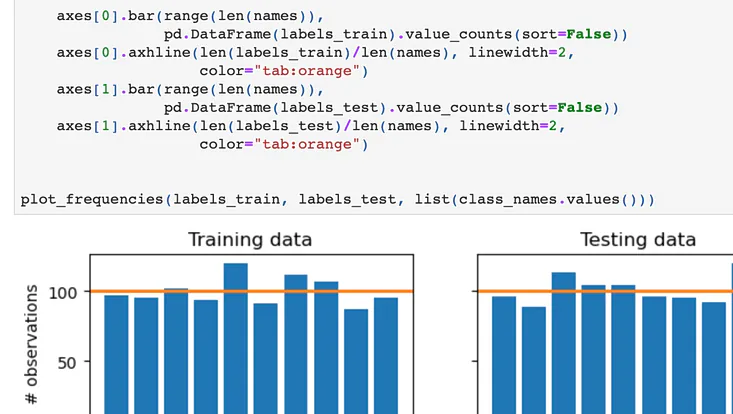
Code plus Graphic

Photo: UHH / J.Lederer

Data science plays an essential role across almost all disciplines and industries, automating processes, detecting patterns in massive datasets, and assessing risks. In healthcare, data science aids in diagnosing diseases and personalizing treatments, while in finance, it helps detect fraud and optimize investments. Data science also powers AI-driven innovations like chatbots, recommendation systems, and self-driving technologies, reshaping the way we live and work.

The courses can be categorized into three focus areas:

Three focus areas

Probability and statistics

Course name
(responsible instructor)
Lectures and lab sessions Number of credits
High-dimensional statistics I
(Johannes Lederer)
2+2 hours 8
High-dimensional statistics II
(Johannes Lederer)
2+2 hours 12
Introduction to Extreme Value Theory
(Holger Drees)
2+1 hours 6
Multivariate Extreme Value Statistics
(Holger Drees)
2+1 hours 9
Introduction to Stein’s method
(Chinmoy Bhattacharjee)
3+1 hours 8
Empirical processes
(Natalie Neumeyer)
3+1 hours 8
Functional data analysis
(Natalie Neumeyer)
2+1 hours 6
Bootstrap
(Natalie Neumeyer)
2+1 hours 6
Asymptotic statistics
(Natalie Neumeyer)
2+1 hours 6
Time series analysis
(Natalie Neumeyer)
2+1 hours 9
Stochastic analysis
(Vitalii Konarovskyi)
4+2 hours 12
Stochastic differential equations (with application to supervising learning)
(Vitalii Konarovskyi)
3+1 hours 12

Optimization and numerical analysis

Course name
(responsible instructor)
Lectures and lab sessions Number of credits

Mathematical Machine Learning
(Armin Iske)

2+1 hours 6
Inverse Problems and Learning
(Martin Burger)
2+1 hours 6
Non-Smooth Optimization
(Winnifried Wollner)
2+1 hours 6
Optimization Methods for Machine Learning
(Winnifried Wollner)
2+1 hours 6
Introduction to Deep Learning*
(Martin Spindler)
2+1 hours 6
Causal Machine Learning*
(Martin Spindler)
2+1 hours 6

* Courses offered outside MIN; admission determined by the respective department

Data-science practice and applications

Course name
(responsible instructor)
Lectures and lab sessionsNumber of credits

Statistical Programming with Python*
(Martin Spindler)

2+1 hours 6

Introduction in Deep Learning*
(Martin Spindler)

2+1 hours 8
Qualified courses from the natural sciences

* Courses offered outside MIN; admission determined by the respective department

To gain in-depth knowledge in mathematical data science, we recommend completing approximately 30 credits from the above list, with at least 9 credits from each of the first two focus areas. Note that not all courses are offered every year.

Contact

Contact

Prof. Dr. Johannes Lederer
University of Hamburg
Professor for Mathematics of data driven methods
Bundesstraße 55, Room T19
20146 Hamburg
Tel: +49 40 2395-
Email: johannes.lederer"AT"uni-hamburg.de

Office hours

    by appointment

Last update: 6 October 2025

  • Feedback
  • Legal notice
  • Privacy statement
  • Accessibility
  • Site map

University of Hamburg

Innovating and Cooperating for a Sustainable Future in a Digital Age

  • Follow us on Instagram.
  • Follow us on Facebook.
  • Connect with us on LinkedIn.
  • Follow us on Mastodon.
  • Follow us on Bluesky.
  • Subscribe to our channel on YouTube.
    • Studies
    • Prospective students
    • Continuing education
    • Research
    • Teaching at UHH
    • Doctoral studies
    • Job opportunities
    • Knowledge exchange
    • University
    • Excellence
    • Faculties
    • Alumni
    • Contact
    • Campus Navigator
    • UHHApp
    • Emergencies, safety and security
    • Antidiscrimination
Go to family-friendly higher education institution audit
Go to internationalisation re-audit
Go to the Sustainability Audit page
Go to Diversity Audit
Go to System accreditation

© 2026 University of Hamburg. All rights reserved