
Prof. Dr. Hans Daduna
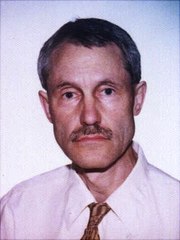
Professor Emeritus für Stochastische Methoden des Operations Research
Anschrift
Sprechzeiten
Bis auf weiteres finden keine Sprechstunden statt. Ich bin aber per E-Mail erreichbar oder telefonisch unter +49 40 5000253.
Telefonische Auskünfte sind ansonsten im Sekretariat des Schwerpunkts Mathematische Statistik und Stochastische Prozesse unter +49 40 42838-4924 zu erhalten.
Kontakt
Werdegang und allgemeine Angaben
–Letzte Änderung: März 2020–
Informationen zur Person
- Professor für Mathematik, insbes. Stochastische Methoden des Operations Research, am Fachbereich Mathematik der Universität Hamburg seit 1984
- Wissenschaftlicher Assistent und Wissenschaftlicher Mitarbeiter am Fachbereich Mathematik der Technischen Universität Berlin 1977–1984
- Studium der Mathematik mit Nebenfächern Physik, Informatik, Chemie, Geschichte der Mathematik und Naturwissenschaften an der Universität Hamburg 1970–1975
- Diplom in Mathematik 1975; Promotion in Mathematik 1979; Habilitation in Mathematik 1984
Herausgebertätigkeit
- Mitherausgeber von Mathematical Methods of Operations Research, 1987 - 2008
- Editor Communications in Statistics: Stochastic Models,
- Associate Editor International Journal of Stochastic Analysis (former Journal of Applied Mathematics and Stochastic Analysis),
- Advisory Editor Engineering Simulation,
- Mitherausgeber OR Spektrum (1991 - 1996),
- Beirat des OR Spektrum (1996 - 2005)
Mitgliedschaft in Programmausschüssen wissenschaftlicher Tagungen
- 20th International GI/ITG Conference on „Measurement, Modelling and Evaluation of Computing Systems“, 2020 in Saarbrücken
- 19th International GI/ITG Conference on „Measurement, Modelling and Evaluation of Computing Systems“, 2018 in Erlangen
- 9. Workshop „Leistungs–, Verlässlichkeits– und Zuverlässigkeitsbewertung von Kommunikationsnetzen und verteilten Systemen“ des GI/ITG–Fachausschusses „Messung, Modellierung und Bewertung von Rechensystemen“ (MMBnet2017), Hamburg 2017
- International Teletraffic Congress ITC 29, Genua 2017
- 18th International GI/ITG Conference on „Measurement, Modelling and Evaluation of Computing Systems“ and „Dependability and Fault Tolerance“, 2016 in Münster
- 8. Workshop „Leistungs–, Zuverlässigkeits– und Verlässlichkeitsbewertung von Kommunikationsnetzen und verteilten Systemen“ des GI/ITG–Fachausschusses „Messung, Modellierung und Bewertung von Rechensystemen“ (MMBnet15), Hamburg 2015
- 17th International GI/ITG Conference on „Measurement, Modelling and Evaluation of Computing Systems“ and „Dependability and Fault Tolerance“. 2014 in Bamberg
- 7. Workshop „Leistungs–, Zuverlässigkeits– und Verlässlichkeitsbewertung von Kommunikationsnetzen und verteilten Systemen“ des GI/ITG–Fachausschusses „Messung, Modellierung und Bewertung von Rechensystemen“ (MMBnet13), Hamburg 2013
- European Conference on Operational Research 2012 (EURO 2012), Vilnius, Lithuania Track on „Quantitative Models for Performance and Dependability“
- 16th International GI/ITG Conference on „Measurement, Modelling and Evaluation of Computing Systems“ and „Dependability and Fault–Tolerance“ (MMB + DFT 2012), Kaiserslautern
- 6. Workshop „Leistungs–, Zuverlässigkeits– und Verlässlichkeitsbewertung von Kommunikationsnetzen und verteilten Systemen“ des GI/ITG–Fachausschusses „Messung, Modellierung und Bewertung von Rechensystemen“ (MMBnet11), Hamburg 2011
- Annual Conference of the German Society for Operations Research 2010, München, Track on „Quantitative Models for Performance and Dependability"
- 15th International Conference on „Measurement, Modelling and Evaluation of Computing Systems“ and „Dependability and Fault Tolerance“, (Jahrestagung der Fachgruppe MMB in Kooperation mit dem Fachausschuss „Verlässlichkeit und Fehlertoleranz") (MMB + DFT 2010), Essen
- 5. Workshop „Leistungs–, Zuverlässigkeits– und Verlässlichkeitsbewertung von Kommunikationsnetzen und verteilten Systemen“ des GI/ITG–Fachausschusses „Messung, Modellierung und Bewertung von Rechensystemen“ (MMBnet09), Hamburg 2009
- 14th GI/ITG Conference on Measurement, Modeling, and Evaluation of Computer and Communication Systems (MMB 2008), Dortmund,
- 4. Workshop „Leistungs–, Zuverlässigkeits– und Verlässlichkeitsbewertung von Kommunikationsnetzen und verteilten Systemen“ des GI/ITG–Fachausschusses „Messung, Modellierung und Bewertung von Rechensystemen“ (MMBnet07), Hamburg 2007
- 13th GI/ITG Conference on Measurement, Modeling, and Evaluation of Computer and Communication Systems (MMB 2006), Nürnberg–Erlangen
- 18. Annual Conference of the German Society for Operations Research, Kiel 1989, Chair of the Track „Stochastic Processes with Reliability and Queueing Theory"
- 17. Annual Conference of the German Society for Operations Research, Berlin 1988, Chair of the Track „Reliability and Queueing Theory"
- Performance 86 and ACM Sigmetrics 86, North Carolina State University, Raleigh, N.C. 1986
Mitgliedschaft in Wissenschaftlichen Gesellschaften
- Hamburger Mathematische Gesellschaft von 1690 (Mathematical Society in Hamburg - founded 1690)
- GI: Gesellschaft für Informatik (German Society of Computer Sciences)
- DMV: Deutsche Mathematiker Vereinigung (German Mathematical Society)
- GOR: Gesellschaft für Operations Research (German Society of Operations Research)
- Fachgruppe Stochastik der DMV (Interest Group Stochastics in DMV)
- Interessengruppe Messung, Modellierung und Bewertung von Rechensystemen der GI und ITG (Interest Group Measurement, Modeling, and Performance Analysis of the GI and ITG)
- Arbeitsgruppe Applied Probability der GOR (Applied Probability Group of the GOR)
Akademische Funktionstätigkeiten
- Dekan (Sprecher) des Fachbereichs: April 1998 bis April 2000,
- Prodekan (Stellvertretender Sprecher) des Fachbereichs: April 1997 bis April 1998 und April 1989 bis April 1991
- Mitglied des Konzils der Universität Hamburg 1998–2001
- Mitglied des Planungsausschusses der Universität Hamburg 2001–2005
- Frauenbeauftragter des Fachbereichs Mathematik 1985–2007
Forschung
–Letzte Änderung: 02. März 2017–
Die Inhalte dieses Bereiches liegen nur in englischer Sprache vor. Ausführliche Informationen können über die englische Version dieser Seite eingesehen werden.
Veröffentlichungen
–Letzte Änderung: März 2020–
Mathematik
- Stochastische Algebra über höchstens abzählbaren Mengen
Elektronische Informationsverarbeitung und Kybernetik 12 (11/12), 589–598 1976 - Stochastic algebras and stochastic automata over general measurable spaces : Algebraic theory and a decomposition theorem
in : Karpinsky,M.(ed.): Fundamentals in Computation theory, Lecture Notes in Computer Sciences 56, Springer,Berlin, 72–76 1977 - Stochastic cellular automata
Foundations of Control Engineering 4 (4), 149–164 1979 - A discrete time round-robin queue with Bernoulli input and general arithmetic service time distribution (with Rolf Schaßberger)
Acta Informatica 15, 251–263 1981 - On the structure of general stochastic automata
R.A.I.R.O. ser.Theor.Comp.Sc. 15 (4), 287–302 1981 - The time for a round–trip in a cycle of exponential queues (with R. Schassberger)
in: Disney, R. L., Ott, T. J. (eds.): Applied Probability-Computer Sciences: The Interface, Vol. II, Birkhäuser Boston, 103–106 1982 - Passage times for overtake-free paths in Gordon-Newell networks
Adv.Appl.Prob. 14, 672–686 1982 - The time for a round trip in a cycle of exponential queues (with Rolf Schaßberger)
J.Ass.Comp.Mach. 30 (1), 146–150 1983 - Networks of queues in discrete time (with Rolf Schaßberger)
Zeitschrift f. Oper. Res. ser.A 27, 159–175 1983 - On passage times in Jackson networks : Two-stations walk and overtake-free paths
Zeitschrift f. Oper. Res. ser.A 27, 239–256 1983 - A discrete time technique for solving closed queueing network models of computer systems (with Rolf Schaßberger)
in : Kühn,P.J.,Schulz,K.M.(eds.): Messung, Modellierung und Bewertung von Rechensystemen, Informatik Fachberichte 61, Springer Berlin, 122–134 1983 - Some remarks on papers by Boxma,Melamed and Hordijk/Van Dijk concerning networks of queues
Bull.of the International Statistical Institut 50 (3), 337–339 1983 - Burke's theorem on passage times in Gordon-Newell networks
Adv. Appl. Prob. 16, 867–886 1984 - The cycle time distribution of cyclic two-stage queues with a non–exponential server
in : Bacelli,F., Fayolle,G. (eds.):Modelling and Performance Evaluation Methodology, Lecture Notes in Control and Information Sciences 60, Springer Berlin, 641–653 1984 - Verweilzeitverteilungen in Netzwerken von Bedienungssytemen : Analytische Methoden zur Bestimmung kundenorientierter Leistungsmasse in verteilten Systemen
in : Streitferdt,L.,et al.(eds.) : Operations Research Proceedings 1985, Springer Berlin,514–522 1985 - The distribution of residence times and cycle times in a closed tandem of processor sharing queues
in : Beilner,H.(ed.) : Messung,Modellierung und Bewertung von Rechensystemen, Springer Verlag, 125–140 1985 - The busy period distribution in a closed tandem of queues
Optimization 16, 755–766 1985 - The cycletime distribution in a central server network with state dependent branching
Optimization 16, 617–626 1985 - Cycle times in two-stage closed queueing networks : Applications to multiprogrammed computer systems with virtuel memory
Operations Research 34 (2), 281–287 1986 - Two–stage cyclic queues with non-exponential servers : Steady-state and cycle times
Operations Research 34 (3), 455–459 1986 - Repair times in a two-echelon repair system with control
in : Beckmann,M.J.,et al.(eds.) : Methods of Operations Research 53, Verlag Anton Hain, 375–386 1986 - Sojourn times in queueing networks with multiserver nodes (with Rolf Schaßberger)
J. Appl. Prob. 24, 511–521 1987 - Cycle times in a starlike network with state-dependent routing
J. Appl. Math. and Sim. 1, 1–12 1987 - Optimal control of a queueing system with an exponential and an Erlangian server and renewal input
Optimization 18 (5), 883–892 1987 - On the busy period in networks of queues : Mean value analysis
in : Domschke,W.,et al.(eds) : Methods of Operations Research 57, Verlag Anton Hain, 177–184 1987 - Busy periods for subnetworks in stochastic networks : Mean value analysis
J. Ass. Comp. Mach. 35 (3), 668–674 1988 - Simultaneous busy periods for nodes in a stochastic network
Performance Evaluation 9, 103–109 1989 - Mean value analysis for the duration of heavy traffic periods in subnetworks of a queueing network
in: Stiege,G.;Lie,J.S.(eds): Messung, Modellierung und Bewertung von Rechensystemen und Netzen, Informatik-Fachberichte 218, 16–28, Springer Berlin 1989 - Sojourn times in queueing networks (with O.J.Boxma)
in: Takagi,H.(ed): Stochastic analysis of computer and communication systems, 401–450 North-Holland, Amsterdam 1990 - Exchangeable items in repair systems : Delay times
Operations Research 38(2), 349–354 1990 - On network flow equations and splitting formulas for sojourn times in queueing networks
J.Appl.Math.and Stoch.Analysis 4, 111–116 1991 - A concurrency control problem in a time-sharing system with different job types
Kybernetika (Praha) 27, 53–65 1991 - Delay time distributions and adjusted transfer rates for Jackson networks (with Rolf Schaßberger)
AEU–Archiv für Elektronik und Übertragungstechnik 47, (Special Issue on Teletraffic Theory and Engineering in Memory of Felix Pollaczek) 342–348 1993 - On the stability of queueing systems under precedence restrictions for the service of customers
Queueing Systems and Their Appl. 17, 73–88, 1994 - Dependencies in Markovian networks (with Ryszard Szekli)
Adv.Appl.Prob. 27, 226–254 1995 - A queueing theoretical proof of increasing property for Polya–frequency functions (with Ryszard Szekli)
Statistics and Probabilty Letters 26, 233–242, 1996 - The cycle time distribution in a cycle of Bernoulli servers in discrete time
Mathematical Methods in Operations Research 44, 295–332, 1996 - Sojourn time distributions in non-product-form queueing networks
in : Dshalalow,J.(ed.): Frontiers of queueing: Models and Applications in Science and Engineering, 197–224, CRC Press, Boca Raton, 1996 - Discrete time queueing networks: Recent developments
in : Tutorials Performance 96 (Lecture Notes), 163–204, IFIP, LRC-EPFL, Lausanne, 1996 - Some results for steady-state and sojourn time distributions in open and closed linear networks of Bernoulli servers with state-dependent service and arrival rates
Performance Evaluation 30, 3–18, 1997 - Discrete time analysis of a state dependent tandem system with different customer types
in: Freksa, Christian; Jantzen, Matthias; Valk, Rüdiger (eds.): Foundations of Computer Science (Potential – Theory – Cognition), Lecture Notes in Computer Science 1337, 287–296, 1997
extended version: Preprint No.97-6,Inst.f.Math.Stochastik,Universität Hamburg 1997 (20 S.) - The joint distribution of sojourn times for a customer traversing a series of queues : The discrete time case
Queueing Systems and Their Applications 27, 297–323, 1997 - Individual customer's behaviour in networks with state-dependent arrival rates (with Stephan Meyer)
Queueing Systems and Their Applications 32, 351–362, 1999 - Optimal strategies for an inventory systems with cost functions of general form (with Pavel S. Kopov und Ludmila P. Tur)
Cybernetics and System Analysis 35 (4), 602–618, 1999 (translation from Kibernetica i Sistemyi Analiz (4)' 99, 106–123, 1999 ) - Optimal admisssion control for M/D/1/K queueing systems (with Pavel S. Kopov)
Mathematical Mathods of Operations Research 50, 91–100, 1999 - On the correlation of sojourn times in open networks of exponential multiserver queues (with Ryszard Szekli)
Queueing Systems and Their Applications 34, 169–181, 2000 - Local control of interacting Markov fields on graphs with compact state space (with Ruslan K. Chornei and Pavel S. Knopov)
Kibernetica i Sistemyi Analiz 2001, 37 p. 348–360, translation: Cybernetics and System Analysis 3, 62–77, 2001,
also available as Preprint No.2000-09, Schwerpunkt Mathematische Statistik und Stochastische Prozesse, University of Hamburg 2000, Link zu den Preprints. - Stochastic networks with product form equilibrium , in: D.N. Shanbhag and C.R. Rao (eds.) Handbook of Statistics, Vol. 19, Stochastic Processes: Theory and Methods, p. 309–364, 2001
- Queueing Networks with Discrete Time Scale-Explicit Expressions for the Steady State Behavior of Discrete Time Stochastic Networks
Lecture Notes in Computer Science 2046, Springer Heidelberg 2001 - Discrete time tandem networks of queues – Effects of different regulation schemes for simultaneous events
(with Bernadette Desert)
Performance Evaluation 47, 73–104, 2002 - Conditional job observer property for multitype closed queueing networks
Journal of Applied Probability 39 (2002) p. 865–881 - Dependence structure of sojourn times via partition separated ordering (with Ryszard Szekli)
Operations Research Letters 31, 462–472, 2003
Extended version: Preprint No.2002–03, Schwerpunkt Mathematische Statistik und Stochastische Prozesse, University of Hamburg 2002, Link zu den Preprints. - Modeling networks with unreliable servers (with Cornelia Sauer)
Proceedings of the 2. MMB–Arbeitsgespräch Leistungs–, Zuverlässigkeits und Verlässlichkeitsbewertung von Kommunikationsnetzen und verteilten Systemen,
Berichte des Fachbereichs Informatik der Universität Hamburg No. 242, 83–90, Hamburg 2002. - Separable networks with unreliable servers (with Cornelia Sauer)
in Charzinski, J; Lehnert, R.; Tran–Gia, P. (eds.): Providing Quality of Service in Heterogeneous Environments (Proceedings of the 18 ITC, Berlin), Teletraffic Science and Engineering Vol 5b, 821–830, Elsevier 2003.
Extended version: BCMP networks with unreliable servers (with Cornelia Sauer)
Preprint No.2003–01, Schwerpunkt Mathematische Statistik und Stochastische Prozesse, University of Hamburg 2003, Link zu den Preprints. - Asymptotic throughput in discrete-time cyclic networks with queue-length-dependent service rates
(with Subrahmanian Ramakrishnan and Victor Pestien)
Stochastic Models, 19, 483–506, 2003
Preliminary version: Preprint No.2001–04, Schwerpunkt Mathematische Statistik und Stochastische Prozesse, University of Hamburg 2001, Link zu den Preprints. - Availability formulas and performance measures for separable degradable networks (with C. Sauer)
Economic Quality Control, 18, 165–194, 2003 - On the correlation structure of closed queueing networks (with Ryszard Szekli)
Stochastic Models, 20, 1–30, 2004
Preliminary version: Preprint No.2000–05, Schwerpunkt Mathematische Statistik und Stochastische Prozesse, University of Hamburg 2000, Link zu den Preprints. - Controlled semi–Markov fields with graph–structured compact state space (with Ruslan K. Chornei and Pavel S. Knopov)
Theory of Probability and Mathematical Statistics 69, 39–53, 2004
translation from: Teor. Ymovirnost. Matem. Statist. 69, 42–47, 2003, (in Ukrainian)
also available as Preprint No.2002–08, Schwerpunkt Mathematische Statistik und Stochastische Prozesse, University of Hamburg 2002, Link zu den Preprints. - Stochastic games for distributed players on graphs (with Ruslan K. Chornei and Pavel S. Knopov)
Mathematical Methods of Operations Research 60, 279–298, 2004
Preliminary version: Preprint No.2002–06, Schwerpunkt Mathematische Statistik und Stochastische Prozesse, University of Hamburg 2002, Link zu den Preprints. - Degradable networks with general up and down time distributions. (with C. Sauer)
in: Buchholz, P.; Lehnert, R.; Pioro, M. (eds.): MMB & PGTS 2004,
Proceedings of the 12th GI/ITG Conference on Measuring, Modelling and Evaluation of Computer and Communications Systems and 3rd Polish–German Teletraffic Symposium, 185–194, 2004
Extended Version: Preprint No.2004–04, Schwerpunkt Mathematische Statistik und Stochastische Prozesse, University of Hamburg 2004, Link zu den Preprints. - An invariance property of conditional sojourn time distributions in cyclic networks of queues (with Christian Malchin)
Operations Research Letters 33, 1–8, 2005
Preliminary version: Preprint No.2003–06, Schwerpunkt Mathematische Statistik und Stochastische Prozesse, University of Hamburg 2003, Link zu den Preprints. - Controlled Markov fields with finite state space on graphs ( with Ruslan K. Chornei and Pavel S. Knopov)
Stochastic Models 21, 847–874, 2005
also available as Preprint No.2000-08, Schwerpunkt Mathematische Statistik und Stochastische Prozesse, University of Hamburg 2000, Link zu den Preprints. - Dependence ordering for queueing networks with breakdown and repair (with Cornelia Sauer, Rafal Kulik, Ryszard Szekli)
Probability in the Engineering and Informational Sciences 20, 575–594, 2006
also available as: Isotone differences ordering for unreliable Markovian queueing networks, Preprint No.2005-04, Schwerpunkt Mathematische Statistik und Stochastische Prozesse, University of Hamburg 2005. - M/M/1 Queueing systems with inventory
(with Maike K. Schwarz, Cornelia Sauer, Rafal Kulik, Ryszard Szekli)
Queueing Systems and Their Applications 54, 55–78, 2006
also available as: Preprint No.2003-07, Schwerpunkt Mathematische Statistik und Stochastische Prozesse, University of Hamburg 2003, Link zu den Preprints. - Control of Spatially Structured Random Processes and Random fields with Applications ( with Ruslan K. Chornei and Pavel S. Knopov)
Springer, New York, 2006 - Dependence ordering for Markov processes on partially ordered spaces (with Ryszard Szekli)
Journal of Applied Probability 43, 793–814, 2006
also available as: Report No. 16 2004/2005, fall, Institut Mittag-Leffler, 2005. - Queueing systems with inventory management with random lead times and with backordering (with M. Schwarz )
Mathematical Methods of Operations Research 64, 383–414, 2006
also available as: Preprint No.2005-03, Schwerpunkt Mathematische Statistik und Stochastische Prozesse, University of Hamburg 2005, Link zu den Preprints. - Availability and performance analysis in a discrete time tandem network with product form steady state (with Christian Malchin)
in: German, R.; Heindl, A. (eds.): Proceedings of the GI/ITG Conference on Measuring, Modelling and Evaluation of Computer and Communications Systems , 2006, 381 –398, 2006
Extended Version: Preprint No.2005-06, Schwerpunkt Mathematische Statistik und Stochastische Prozesse, University of Hamburg 2005, Link zu den Preprints. - Product form models for queueing networks with an inventory (with M. Schwarz and C. Sauer)
Stochastic Models 23, 627–663, 2007; also available as extended version:
Exponential queueing networks with an attached inventory under (r,Q)- or (r,S)-policy (with M. Schwarz and C. Sauer)
Preprint No.2003-09, Schwerpunkt Mathematische Statistik und Stochastische Prozesse, University of Hamburg 2003, Link zu den Preprints. - Weak convergence limits for sojourn times in cyclic queues under heavy traffic (with Christian Malchin and Ryszard Szekli)
Journal of Applied Probability 45, 1–14, 2008; also available as
Preprint No.2007-04, Schwerpunkt Mathematische Statistik und Stochastische Prozesse, University of Hamburg 2007, Link zu den Preprints. - Throughput limits from the asymptotic profile of cyclic networks with state-dependent service rates (with Subrahmanian Ramakrishnan and Victor Pestien)
Queueing Systems and Their Applications 58, 191–219, 2008; also available as extended version
On convergence of throughput in large networks with state-dependent service rates – Preprint No.2005-05, Schwerpunkt Mathematische Statistik und Stochastische Prozesse, University of Hamburg 2005. - Impact of routing on correlation strength in stationary queueing network processes (with Ryszard Szekli)
Journal of Applied Probability 45 (3), 846–878, 2008 - Customer oriented performance measures for packet transmission in a ring network with blocking (with Marten Holst)
in: (eds.): Proceedings of the GI/ITG Conference on Measuring, Modelling and Evaluation of Computer and Communications Systems , 2008, 223–236, 2008 - On the behavior of stable subnetworks in non–ergodic networks with unreliable nodes (with Jennifer Mylosz)
Computer Networks 53 (8), 1249–1263, 2009 - Jackson Networks (Open and Closed)
in: Wiley Encyclopedia of Operations Research and Management Science, 2010 - Discrete time queueing networks with product form steady state: Availability and performance analysis in an integrated model (with Christian Malchin)
Queueing Systems 65, 385–421, 2010 2010; also available as
Preprint No.2006-02, Schwerpunkt Mathematische Statistik und Stochastische Prozesse, University of Hamburg 2006, Link zu den Preprints. - Discrete time queueing networks with product form steady state
in: Boucherie, R. J. and van Dijk, N. (eds) Queueing Networks: A Fundamental Approach, 269–312, Springer, New York, 2010 - On the behavior of stable subnetworks in non-ergodic networks: A quasi–stationary approach in a two-node system (with Jennifer Mylosz)
in: Wolfinger, B. E. and Heidtmann, K.-D. (eds.): Leistungs–, Zuverlässigkeits und Verlässlichkeitsbewertung von Kommunikationsnetzen und verteilten Systemen, 6. GI/NTG-Workshop MMBnet 2011
Berichte des Fachbereichs Informatik der Universität Hamburg No. 298, 99–106, Hamburg 2011. - Weak convergence limits for closed cyclic networks of queues with multiple bottleneck nodes (with Ole Stenzel)
Journal of Applied Probability 49 (1), 60–83, 2012; also available as
Preprint No.2009-05, Schwerpunkt Mathematische Statistik und Stochastische Prozesse, University of Hamburg 2009, Link zu den Preprints. - Availability in large networks: Global characteristics from local unreliability properties (with Lars Peter Saul)
in: Schmitt, J. (ed.): Proceedings of the 16th International GI/ITG Conference on Measurement, Modelling and Evaluation of Computing Systems and Dependability and Fault Tolerance, Lecture Notes in Computer Science 7201, 1–15, Springer Berlin 2012 - The cyclic queue and the tandem queue (with Onno Boxma)
Queueing Systems 77, 275–295, 2014; DOI 10.1007/s11134-013-9380-8, also available as
Preprint No.2013-01, Schwerpunkt Mathematische Statistik und Stochastische Prozesse, University of Hamburg 2013, Link zu den Preprints. - Modeling and Performance Analysis of a Node in Fault Tolerant Wireless Sensor Networks (with Ruslan Krenzler)
in: Fischbach, K., Krieger, U. (eds.) Measurement, Modelling, and Evaluation of Computing Systems and Dependability and Fault Tolerance, Lecture Notes in Computer Science Volume 8376, Springer 2014, pp 73–87 - Networks of queues in a random environment: Survey of product form results
In: Wolfinger, Bernd E. ; Heidtmann, Klaus-D. (eds): Proc. MMBnet 2015, Berichte des Fachbereichs Informatik der Universität Hamburg, 302, pages 1–17, 2015 - Performability analysis of an unreliable M/M/1-type queue (with Ruslan Krenzler)
In: Wolfinger, Bernd E. ; Heidtmann, Klaus-D. (eds): Proc. MMBnet 2015, Berichte des Fachbereichs Informatik der Universität Hamburg, 302, pages 90–96, 2015 - Loss systems in a random environment-steady state analysis (with Ruslan Krenzler)
Queueing Systems 80, 127–153, 2015 (DOI) 10.1007/s11134-014-9426-6, also available as
Preprint No.2012-04, Mathematische Statistik und Stochastische Prozesse, University of Hamburg 2012, Link zu den Preprints. - Correlation formulas for Markovian network processes in a random environment (with Ryszard Szekli)
Advances in Applied Probability 48 (1), 176–198, 2016; doi:10.1017/apr.2015.12; also available as
Preprint No.2013-05, Mathematische Statistik und Stochastische Prozesse, University of Hamburg 2013, Link zu den Preprints. - Models for integrated production-inventory systems: Steady state and cost analysis (with Sonja Otten and Ruslan Krenzler)
Int. Journal of Production Research, 54 (20), 6174–6191, 2016, DOI:10.1080/00207543.2015.10826692015, - Jackson networks in non-autonomous random environments (with Sonja Otten and Ruslan Krenzler)
Advances in Applied Probability 48, 315–331, 2016 - Monotonicity of base stock policies (with Nha-Nghi de la Cruz)
Operations Research Letters 44, 186–190, 2016, - Non-ergodic Jackson networks with infinite supply – local stabilization and local equilibrium analysis (with Jennifer Sommer and Bernd Heidergott)
Journal of Applied Probability 53(4), 1125–1142, 2016 - Moving queue on a network
In: Remke, A. and Haverkort, B. R.(eds.): Measurement, Modelling, and Evaluation of Dependable Computer and Communication Systems, Lecture Notes in Computer Science 9629, Springer 40–54, 2016 - Analysis of Jackson networks with infinite supply and unreliable nodes (with Jennifer Sommer, Joost Berkhout, and Bernd Heidergott)
Queueing Systems 87 (1–2) 181–217, 2017, online available: DOI 10.1007/s11134-017-9542-1
see also: Preprint No.2014-03, Mathematische Statistik und Stochastische Prozesse, University of Hamburg 2014 - Heuristic approximations for closed networks: A case study in open–pit mining (with Ruslan Krenzler, Robert Ritter, Dietrich Stoyan)
Performance Evaluation 119, 5–26, 2018 - Applying Queueing Theory for Managing Waterways Systems subject to Service Interruptions (with Francesca Marsili, Jörg Bödefeld, Pietro Croce)
in: Procedings of 16th International Probabilistic Workshop 2018, Beton- und Stahlbau Vol. 13, Issue 52, 122–142, 2018 - Optimal capacity allocation in a production-inventory system with base stock (with Nha–Nghi de la Cruz)
Annals of Operations Research 277(2), 329–344, 2019, online available: 2017, October 20 - Robustness analysis of generalized Jackson network (with Joost Berkhout, Bernd Heidergott and Jennifer Sommer)
Computational Management Science, doi.org/10.1007/s10287-019-00355-3, 2019 - Scheduling of waterways maintenance interventions applying queueing theory (with Francesca Marsili, Jörg Bödefeld, Pietro Croce)
In: Caspeele, R., Taerwe, L., and Frangopol, D.M. (eds.): Life Cycle Analysis and Assessment in Civil Engineering: Towards an Integrated Vision
Proceedings of the Sixth International Symposium on Life-Cycle Civil Engineering (IALCCE 2018), 28–31 October 2018, Ghent, Belgium, pages 999–1005, CRC Press 2019 - Availability and performance measures for planning maintenance actions on waterways networks (with Francesca Marsili, Jörg Bödefeld, Pietro Croce)
In: Beer, M. and Zio, E. (eds.): Proceedings of the 29th European Safety and Reliability Conference, pages 1–8, Research Publishing, Singapore 2019, doi:10.3850/981-973-0000-00-0 esrel2019-paper - Separable models for interconnected production-inventory systems (with Sonja Otten and Ruslan Krenzler)
DOI:10.1080/15326349.2019.1692667, Stochastic Models 36 (1), 48–93, 2020 - Performance analysis for loss systems with many subscribers and concurrent services (with Ruslan Krenzler)
(to appear) In: Herrmanns, H. (ed.): Measurement, Modeling and Evaluation of Computing Systems, Lecture Notes in Computer Science 12040, 118–135, Springer 2020 - Graph-based mobility models: Asymptotic and stationary node distribution
(to appear) In: Herrmanns, H. (ed.): Measurement, Modeling and Evaluation of Computing Systems, Lecture Notes in Computer Science 12040, 155–172, Springer 2020 - Analysis of semi-open queueing networks using lost customers approximation with an application to robotic mobile fulfilment systems (with Sonja Otten, Ruslan Krenzler, Lin Xie, and Karsten Kruse)
to appear: OR Spectrum, 2021
Mathematik und Gender
- PerspektivenWechsel: Frauen- und Geschlechterforschung zu Mathematik und Naturwissenschaften (ed., with Helene Götschel)
talheimer sammlung kritisches wissen, Band 12, Talheimer Verlag, Mössingen-Talheim 2001 - Frauen- und Geschlechterforschung zu Mathematik und Naturwissenschaften: Ein selektiver Überblick (with Helene Götschel)
in: Helene Götschel, Hans Daduna (eds.): PerspektivenWechsel: Frauen- und Geschlechterforschung zu Mathematik und Naturwissenschaften
talheimer sammlung kritisches wissen, Band 12, S. 11–23, Talheimer Verlag, Mössingen-Talheim 2001 - Erster Mann als Frauenbeauftragter und erste Frauenförderung im Fachbereich Mathematik
In: Filter, Dagmar, Reich, Jana (eds.): Respekt ! – Frauen verändern Wissenschaft an der Universität Hamburg, Band 9, Forum Genderwissen, 329–334, BoD, Norderstedt 2019
Technische Reporte
- On an M/G/1 queue with time sharing
Preprint Nr.66 Fachbereich Mathematik,Technische Universität Berlin (26 S.) 1980 - Ein mathematisches Modell eines atomaren Schlagabtausches – Probleme bei der wahrscheinlichkeitstheoretischen Modellierung atomarer Kriege
Preprint (12 S.) 1985 - Cycle times in a starlike network with state-dependent routing
in : Radermacher,F.J.,Ritter,G.,Ross,S.M. (eds.) : Stochastic dynamic optimization and applications in scheduling and related areas, Conference Report Universität Passau, 18–22 1985 (Short version of the paper published in JAMS 1987.) - Optimale Zugangskontrolle zu parallelen exponentiellen Bedienungssystemen – Ein einfacher Beweis des Satzes von Winston
Preprint Nr.86-3, Institut f. Math.Stochastik, Universität Hamburg (14 S.) 1986 - The mean busy period distribution for open networks of queues
Preprint Nr.86-4, Institut f. Math.Stochastik, Universität Hamburg (11 S.) 1986 - Note on the ergodicity of closed queueing networks
Preprint Nr.88-3, Institut f. Math.Stochastik, Universität Hamburg (12 S.) 1988 - The method of adjusted transfer rates for computing delay time distributions in data communication systems with window flow control
Preprint Nr.89-3, Institut f. Math.Stochastik, Universität Hamburg (9 S.) 1989 - On the Weber Problem in Logistic and Services Networks (with Vanessa Lange)
Preprint No.2009-02, Mathematische Statistik und Stochastische Prozesse, University of Hamburg 2009, Link zu den Preprints.
Veröffentlichungen
- Algebraisch-stochastische Systeme über endlichen Mengen
Diplom-Arbeit Mathematik,Universität Hamburg 1975 - Stochastische Algebra – Theorie und Anwendungsbeispiele
Dissertation Mathematik, Universität Hamburg 1979
Interessantes aus der Stochastik und angrenzenden Gebieten
–Letzte Änderung: 8. Dezember 2017–
Zum Download von Farn: Ein Programm zur Simulation von Markov Ketten und zur Generierung von Bildern aus der Theorie zufallsbeeinflusster dynamischer Systeme.
Zum Download von Download des ZIP-Archivs von MCQueue und den zugehörigen Dateien auf der Homepage von Henk Tijms an der Freien Universität Amsterdam.
Das Programm stellt numerische Methoden zur Auswertung von Markov Prozessen und Warteschlangensystemen zur Verfügung.
Im Probability Web finden sich viele Informationen zur Stochastik, auch zu Netzwerken von Warteschlangen, Stochastischen Prozessen, usw.